


Up to 400 TPH











89% on NCV
Up to 560°C
Up to 140 kg/cm²(g)
AFBC (Atmospheric Fluidised Bed Combustion) Boilers
Bubbling type AFBC boilers, offering efficient, cost-effective, reliable and viable alternative to conventional solid fuel-fired boilers for industrial applications
Submit your enquirySelect an option
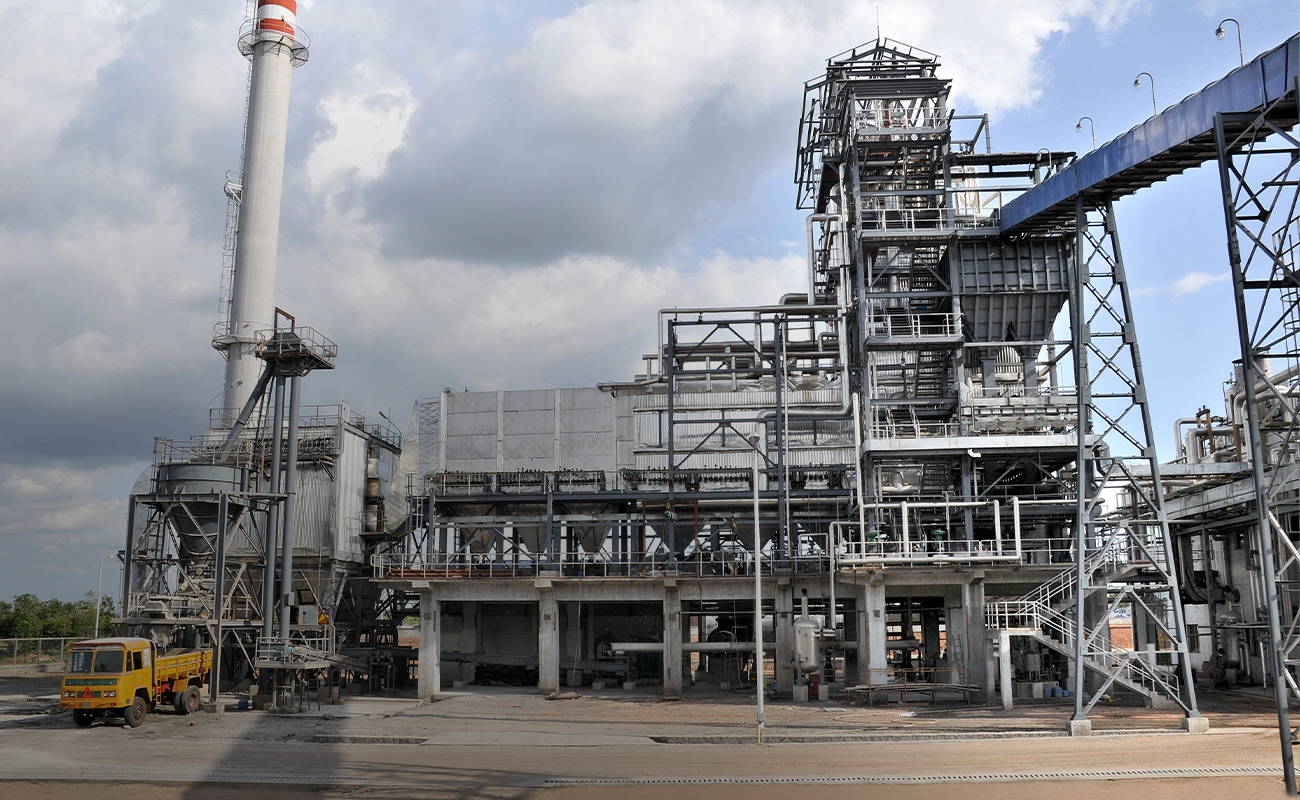
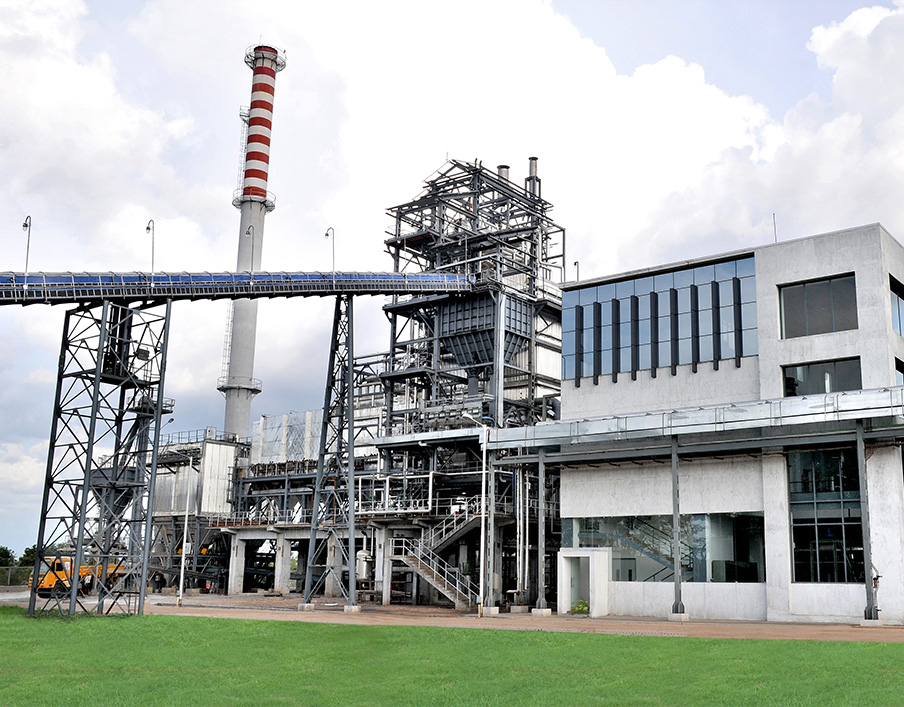
TBWES AFBC boilers utilise bubbling fluidised bed combustion to efficiently burn fuels with high ash, metal content and high-alkali biomasses.
Fuel combustion occurs within a fluidised bed of crushed refractory or sand where an upward air stream ensures significantly higher degree of combustion completeness. This design allows for fuel flexibility, minimised slagging & fouling, high efficiency and significantly reduced emissions (including SOx control via limestone addition, eliminating FGD), leading to lower capital and operating costs.
Technical data
- Product capacity / performance range –
- Capacity: Up to 400 TPH
- Pressure: Up to 140 kg/cm2 (g)
- Temperature: Up to 560°C
- Fuel type or energy sources – Coal, lignite, char, low ash coal, petcoke, paper sludge, washery rejects, roasted chaffs, de-oiled rice bran (DORB), biomass, bagasse, rice husk, spent coffee ground, spent tea waste, pith woodchips, coffee husks, mustard stalk, cotton stalk, sawdust, de-oiled bleach earth (DOBE), rice straw, etc.
- Compliance or standards followed – ASME / IBR / TRCU / PED
- Design –
- Single drum and bi-drum configurations
- Field-erected / fully modularised (plug-and-play) configurations
- Top or bottom supported
- Suspension burning of fuel for higher combustion efficiency
- Bubbling bed ash coolers
- Two-stage steam separation
- In-bed superheater
- Stainless steel fluidising nozzles
- Boiler bank without baffles
- Riffle tube arrangement for in-bed evaporators
- Absence of moving parts reduces maintenance
- Uniform temperature distribution and optimum combustion
- Low excess air requirement results in higher efficiency
- Lower NOx, SOx and CO emissions
- Low temperature operation minimises the biomass fuel ash agglomeration and fouling tendency
- Continuous slow draining of bed ash facilitates easy disposal of large particles, maintains optimal alkali concentration, and prevents dense particle accumulation, ensuring uniform bed density and consistent fluidisation
- Flexibility or customisation options – The product can be customised based on customer needs or scale
- Variants available -
Can be offered as:- Boiler island
- Boiler-turbine-generator (BTG) package
- Turnkey power plant (EPC)

Hopper bottom design is manufactured under license from Babcock & Wilcox, USA
Product features
Flexible variants: field-erected or plug-and-play
Available as field-erected or plug-and-play variants to match site transport limitations and installation needs
Multi-fuel compatibility
Supports a wide range of fuels for operational flexibility
Shop-assembled membrane panels
Shop-assembled, machine-welded membrane panels allow for less refractory and make a gas-tight enclosure resulting in less leakage and improved efficiency
Two-stage steam separation
Utilises two-stage steam separating equipment within the drum, guaranteeing 99.99% steam purity, even during rapid load changes, to ensure turbine-quality steam
Excellent efficiency
89% on NCV
Optimum combustion with staged secondary air system
Secondary overfire air provided from both sides of the furnace ensures complete combustion, resulting in minimum unburnt particles, reduced carbon monoxide and improved efficiency
Bed evaporator design for better reliability and temperature control
Features inline, spaced evaporator tubes for easy access to the bed plate, simplifying maintenance and improving efficiency, along with a riffle tube arrangement for higher-pressure applications to enhance durability
Fluid bed ash coolers for cooling bed ash
Ensures efficient cooling of bed ash using air; the resulting heated air (flue gas) is then sent to an air heater, recovering sensible heat and significantly improving overall system efficiency
Overbed as well as underbed feed system offered
The underbed system uses drag chains and/or rotary feeders for smooth delivery of high-moisture fuel, with hot air transporting the fuel within the combustor and straight fuel lines without bends, enhancing system availability
Inclined airholes
Inclined airholes are designed to prevent bed material re-entry, effectively eliminating back shifting within the system
Stainless steel air nozzles
Stainless steel (bubble cap) nozzles for primary air are engineered with a higher pressure drop, enabling higher turndown ratios and thus providing greater operational flexibility
Pin studs for erosion control
Pin studs welded on in-bed surfaces and furnace walls effectively eliminate tube erosion