


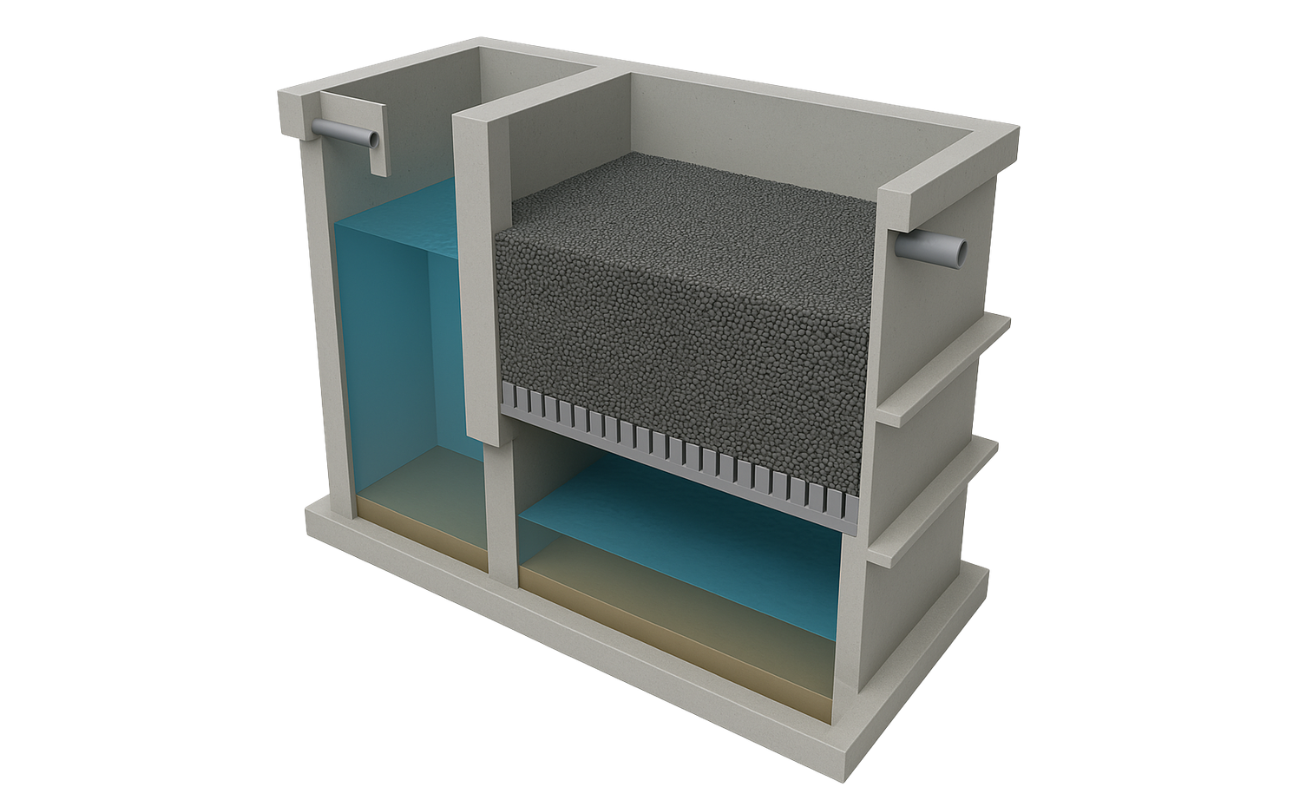
Anaerobic treatment is an energy-efficient process in which microbes transforms organic content of wastewater into biogas in the absence of oxygen.
The process is configured in a reactor with a gastight cover.
Products
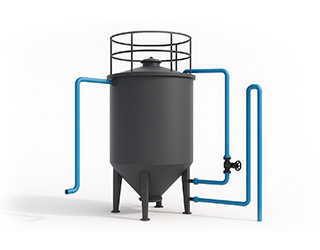
Upflow Anaerobic Sludge Blanket (UASB)
High-rate anaerobic treatment for organic-rich wastewater
Salient Features
- Effective in treating high-strength organic wastewater
- Generates a renewable energy source (biogas) that can be used for heating or electricity generation
- Anaerobic digestion produces significantly less excess sludge compared to aerobic processes
- No requirement for aeration, which is energy-intensive in aerobic treatment
- Generally, less complex than some other advanced wastewater treatment systems
- Can handle high loads in a relatively small reactor volume due to the high biomass concentration
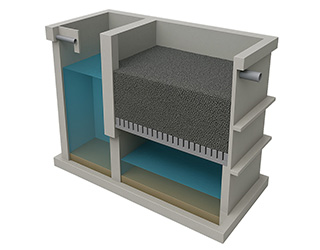
Anerobic Filter
Sustainable wastewater treatment through anaerobic biofilms
Salient Features
- Effective in treating soluble organic matter
- High biomass retention leads to stable and efficient treatment
- Can handle fluctuations in organic loading rates
- Relatively low sludge production compared to aerobic processes
- Relatively simple construction and operation
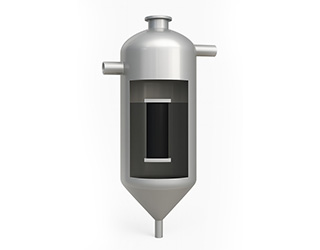
Anerobic MBR
Hybrid anaerobic-membrane systems for high-quality effluent
Salient Features
- Produces high-quality treated water that is low in suspended solids, turbidity, and often bacteria and viruses, making it suitable for reuse applications
- Combines the efficient degradation of organic matter by anaerobic digestion with the excellent solids retention of membrane filtration
- The high biomass concentration and efficient separation allow for smaller reactor volumes compared to conventional anaerobic systems, followed by clarification
- Solids Retention Time (SRT) from Hydraulic Retention Time (HRT) allows for slow-growing microorganisms to thrive, leading to higher degradation of organic matter and better stability
- Generates a renewable energy source (biogas)
- Anaerobic digestion inherently produces less sludge compared to aerobic processes, and the high Solids Retention Time (SRT) in AnMBRs can further reduce sludge yield
- Depending on the specific application, AnMBRs can be integrated with nutrient recovery processes
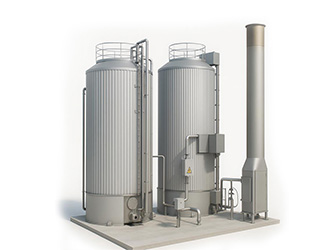
AnoxyBed™
High-rate anaerobic treatment for efficient COD removal
Salient Features
- High-rate treatment: Effectively handles high COD loads, reducing operational costs
- Space-saving design: Tower configuration minimises land requirements
- Enhanced sludge settling: Specialised three-phase separator ensures efficient biomass retention
- Clog-resistant: Unique influent piping design prevents clogging from high Ca2+ and heavy sludge
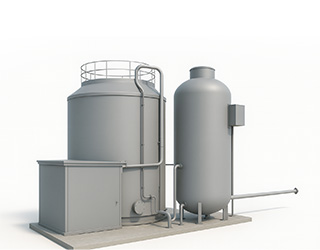
AnoxyMem®
Driving circular economy through advanced wastewater treatment
Salient Features
- Efficiently treat high-strength wastewater and slurries: AnoxyMem® excels in handling COD concentrations from 20,000 to over 200,000 mg/l, making it ideal for a wide range of industrial and municipal applications
- Robust and stable operation: AnoxyMem® handles high FOG, fibre-contaminated wastewater, and slurries with ease. Automated process control optimises reactor performance, including pH, load, foaming, and mixing, while automated CIP simplifies maintenance
- Achieve superior effluent quality: AnoxyMem® produces high-quality effluent by reducing COD up to 99.7%, suitable for direct reuse or further polishing
- Benefit from a simple and reliable system: Featuring a proprietary pressurised membrane system and proven in numerous installations since 2015, AnoxyMem® ensures consistent performance and ease of operation
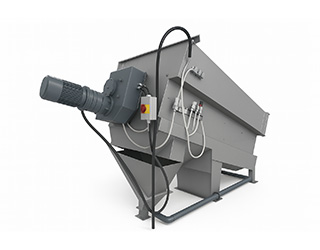
DIGEFLO™
Efficient treatment of high-cod wastewater without pre-separation
Salient Features
- This advanced technology ensures environmental compliance
- It minimises operational expenses