


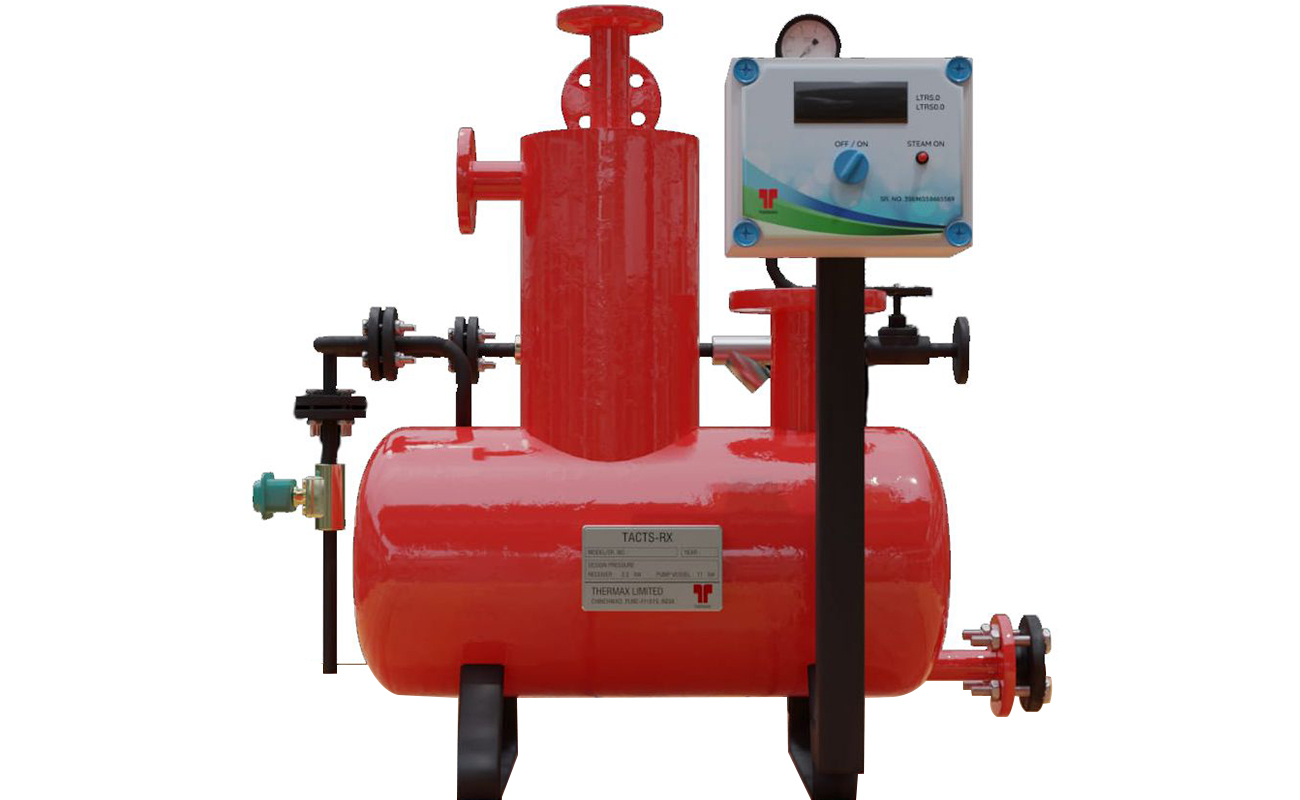
Thermax Compact Automatic Condensate Transfer Pump (TACTS-RX)
Enables superior condensate recovery with a compact, reliable, and energy-efficient automatic pump
Submit your enquiryThe Thermax compact automatic condensate transfer pump (TACTS-RX) is an advanced, automatic condensate transfer pump designed to efficiently recover and return hot condensate to the boiler feed system.
It provides high reliability due to zero moving parts, ability to handle high motive inlet pressures (up to 10 bar(g) for the Ultra-series), and exceptional performance with high condensate temperatures, eliminating cavitation issues commonly found in electric pumps. Condensate, formed when steam liberates heat, is a valuable resource—it is relatively pure compared to most water sources and retains a significant amount of heat. Returning this hot condensate to the boiler feed water reduces the heat required to bring it back to saturation temperature, thereby cutting down on fuel consumption. Every 6°C rise in feedwater temperature can lead to a 1% improvement in thermal efficiency. TACTS-RX is engineered to facilitate this crucial recovery. Unlike conventional electric pumps, which can struggle with high-temperature condensate due to cavitation, TACTS-RX efficiently handles hot condensate, ensuring a continuous and reliable return to the boiler. Its compact, skid-mounted design simplifies installation, making it a cost-effective solution for maximising energy recovery and minimising operational expenses.
Key Industries / Applications:
- Industries: All industries that utilise steam, particularly those aiming to enhance boiler efficiency and reduce operational costs through effective condensate management
- Applications: Returning hot condensate from steam mains, process heating equipment, heat exchangers, and any application where condensate needs to be reliably transferred back to the boiler feed system, especially from low-pressure or high-temperature points
Technical data
- Motive inlet pressure: High motive inlet pressure capability up to 10 bar(g) for TACTS Ultra-series
- Condensate discharge: 25 litres per stroke
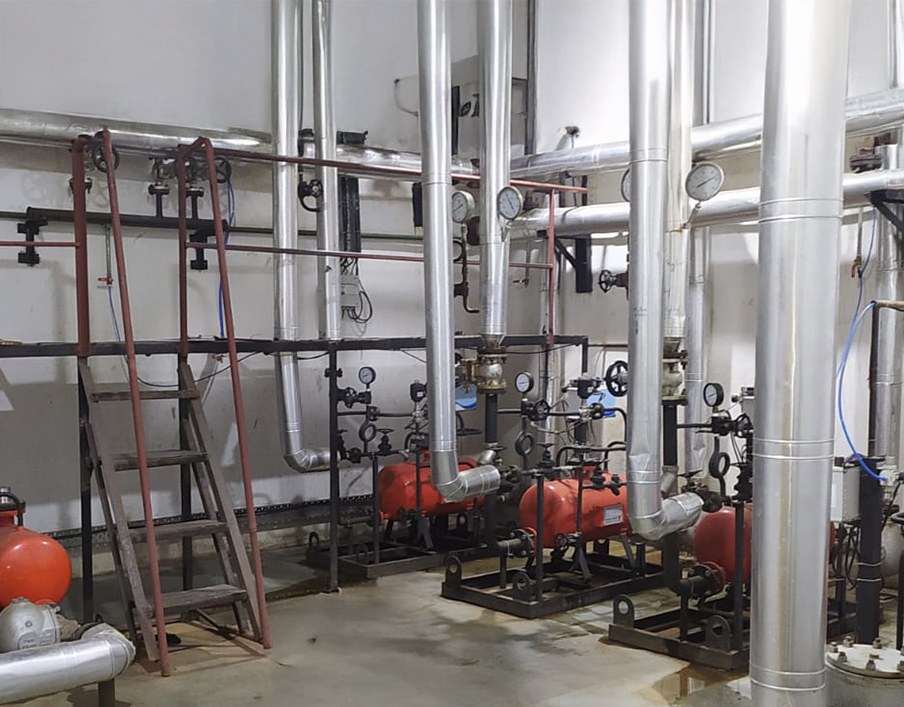
- Design: Skid-mounted unit for easy installation
- Flow totaliser: Large 8-digit LED display for total volume displaced (up to 99999 m³)
- Control: Compact plug-in type controller for level control
- Protection: IP 52 protection with weather-proof and ex-proof design options available for outdoor installations
- Performance: High condensate temperature return capability, preventing cavitation issues
- Typical discharge capacity (litres/hr): Performance varies based on inlet and discharge pressure. For example:
- At 0.5 kg/cm²(g) inlet pressure, discharge capacity ranges from 600 to 680 litres/hr (depending on discharge pressure)
- At 4 kg/cm²(g) inlet pressure, discharge capacity ranges from 580 to 650 litres/hr (depending on discharge pressure)
Product features