

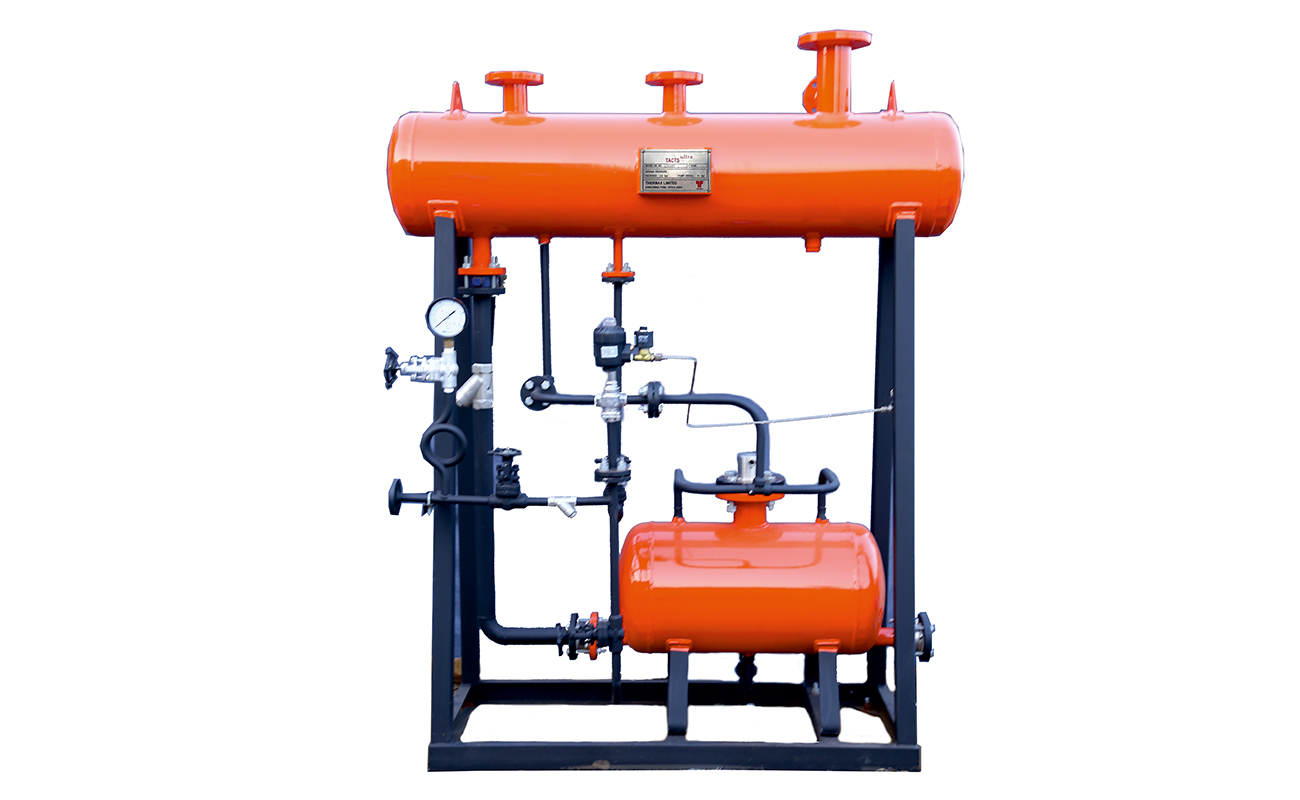
Thermax Automatic Condensate Transfer System (TACTS)
Efficiently returns hot condensate to the boiler without the need for electricity
Submit your enquiryThe Thermax automatic condensate transfer system (TACTS) is a highly efficient, non-electric device designed to automatically pump hot condensate back to the boiler feed tank or directly into the boiler.
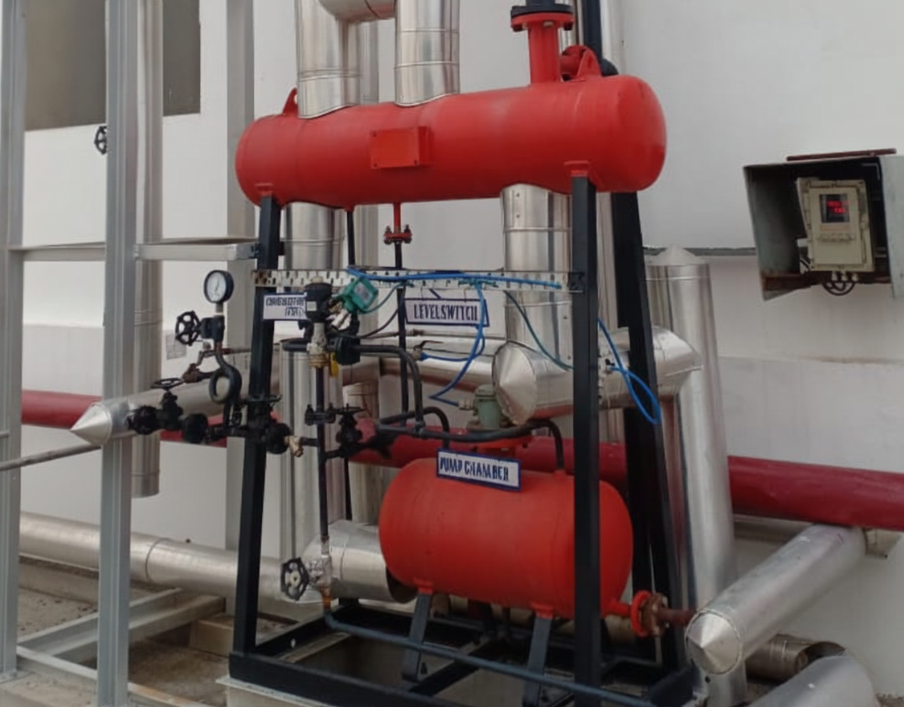
By utilising live steam, compressed air, or motive gas as its operating medium, it eliminates the need for electricity, significantly reduces energy consumption, maintains condensate temperature, and provides a robust solution for returning condensate from low points or vacuum conditions. Conventional electric pumps can struggle with pumping hot condensate due to cavitation (vaporisation at the pump inlet caused by low pressure and high temperature). Automatic condensate transfer pumps overcome this limitation by operating on a principle that allows them to handle high-temperature condensate without cavitation. These pumps typically consist of a receiver chamber, float mechanism, and non-return valves. As condensate fills the receiver, a float rises, actuating a valve that admits motive steam or compressed air, which then pushes the condensate out. This cycle repeats automatically, ensuring continuous and reliable condensate return, particularly from systems under vacuum, at low pressure, or from remote locations where electricity is unavailable or expensive.
Key Industries / Applications:
- Industries: All industries using steam, especially those with extensive steam networks, remote condensate collection points, or concerns about electric pump cavitation
- Applications: Returning condensate from steam mains, tracing lines, heat exchangers, process equipment (e.g., dryers, reboilers) operating at low or fluctuating pressures, and applications under vacuum (e.g., paper machine dryers)
Technical data
- Product capacity / performance range: Available in various capacities to handle different condensate flow rates and discharge pressures (up to typical boiler pressures). Can pump condensate at very high temperatures (e.g., close to saturation temperature)
- Fuel type or energy sources: Operated by live steam, compressed air, or an inert gas. Does not require electricity
- Compliance or standards: Manufactured to relevant international standards for pressure equipment and pumping devices, ensuring safety and reliability
- Design or customisation:
- Operating principle: Mechanical float actuation with motive fluid (steam or air) drive
- Body materials: Typically cast iron, carbon steel, or stainless steel for durability
- Connections: Screwed or flanged connections for inlet, outlet, and motive fluid
- High-pressure options: Specific models available for higher discharge pressures, suitable for direct boiler return
- Vent/bypass: Often includes vent connection and manual bypass
Product features