


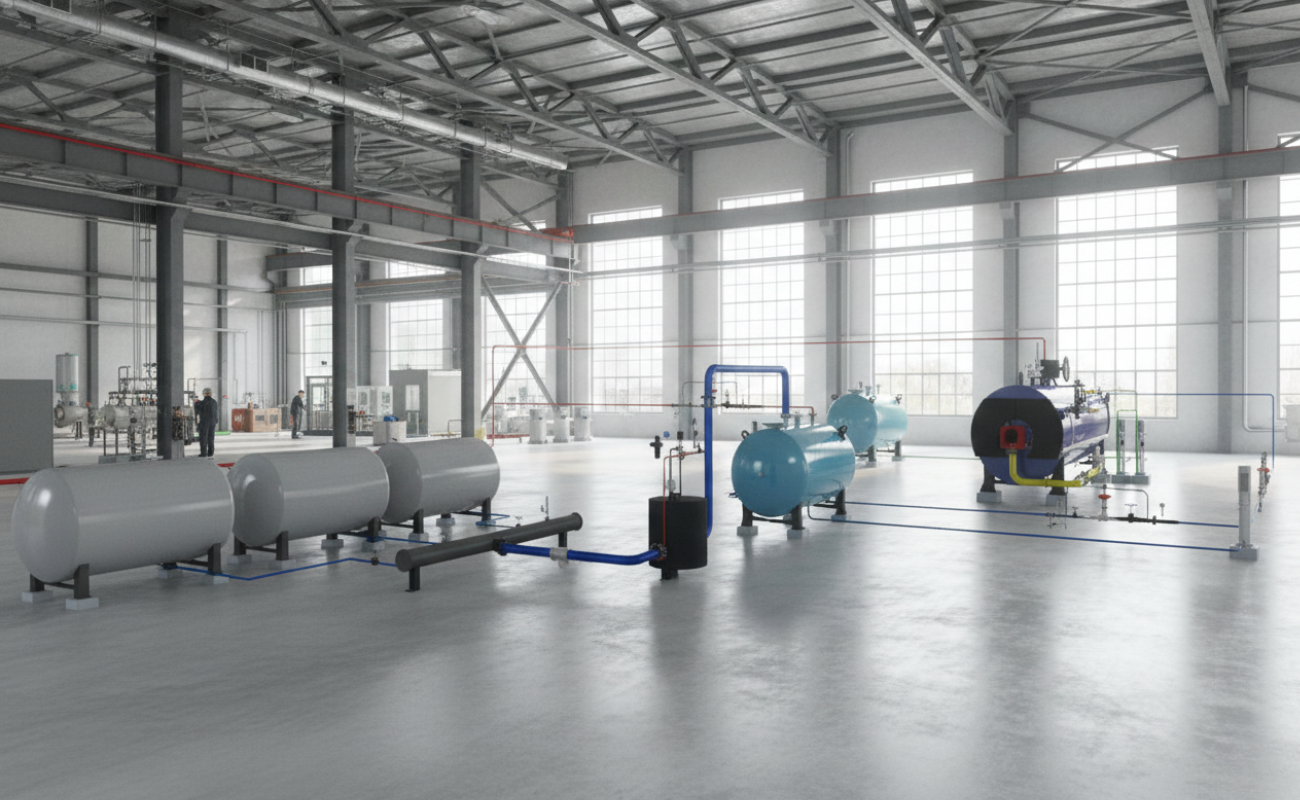
High-Pressure Condensate Recovery System (HPCRS)
Efficiently recovers high-temperature, high-pressure condensate for maximum energy utilisation
Submit your enquiryThe high-pressure condensate recovery system (HPCRS) is an advanced, specialised system designed to recover condensate at high pressure and high temperature, often directly from high-pressure process equipment, and return it to the boiler feed system without flashing to atmosphere.
This maximises the recovery of both sensible and latent heat, virtually eliminating flash steam losses and significantly reducing fuel consumption, water makeup, and chemical treatment costs, leading to unparalleled energy efficiency and substantial operational savings.In many industries, especially those with high-pressure steam applications, energy lost through flash steam when condensate is discharged to atmospheric tanks is prevented by the HPCRS, which maintains condensate under pressure throughout the recovery process. It typically uses specialised pumps (e.g., non-electric or steam-powered, high-pressure automatic condensate transfer pumps) that can handle high-temperature condensate and return it directly to the boiler feed system or even directly into the boiler. This innovative approach ensures that almost all the energy in the condensate is preserved and reused, representing the pinnacle of condensate recovery efficiency.
Key Industries/Applications:
- Industries: Power generation, petrochemical, refineries, chemical, steel, paper, and large industrial plants operating high-pressure steam systems
- Applications: Recovering condensate from high-pressure steam mains, turbines, process heating equipment operating at high pressures, and anywhere high-temperature condensate can flash upon depressurisation
Technical data
- Product capacity / performance range: Custom-engineered systems designed to handle very high condensate temperatures (up to 200°C or more) and pressures (up to 100 bar or higher). Capacities vary based on application demands
- Compliance or standards: Designed and manufactured to rigorous international codes and standards for high-pressure equipment, safety, and performance
- Design or customisation:
- Pumping technology: Utilises robust steam-powered or electric pumps specifically designed for high-temperature, high-pressure condensate
- Closed-loop design: Maintains condensate under pressure throughout the recovery loop to prevent flash
- Flash vessel elimination: Often eliminates the need for atmospheric flash vessels, streamlining the system
- Integration: Seamless integration with boiler feed systems, potentially returning condensate directly to the boiler
- Materials: High-grade materials (e.g., carbon steel, alloy steels, stainless steel) selected for high-pressure/temperature conditions and corrosion resistance
Product features