


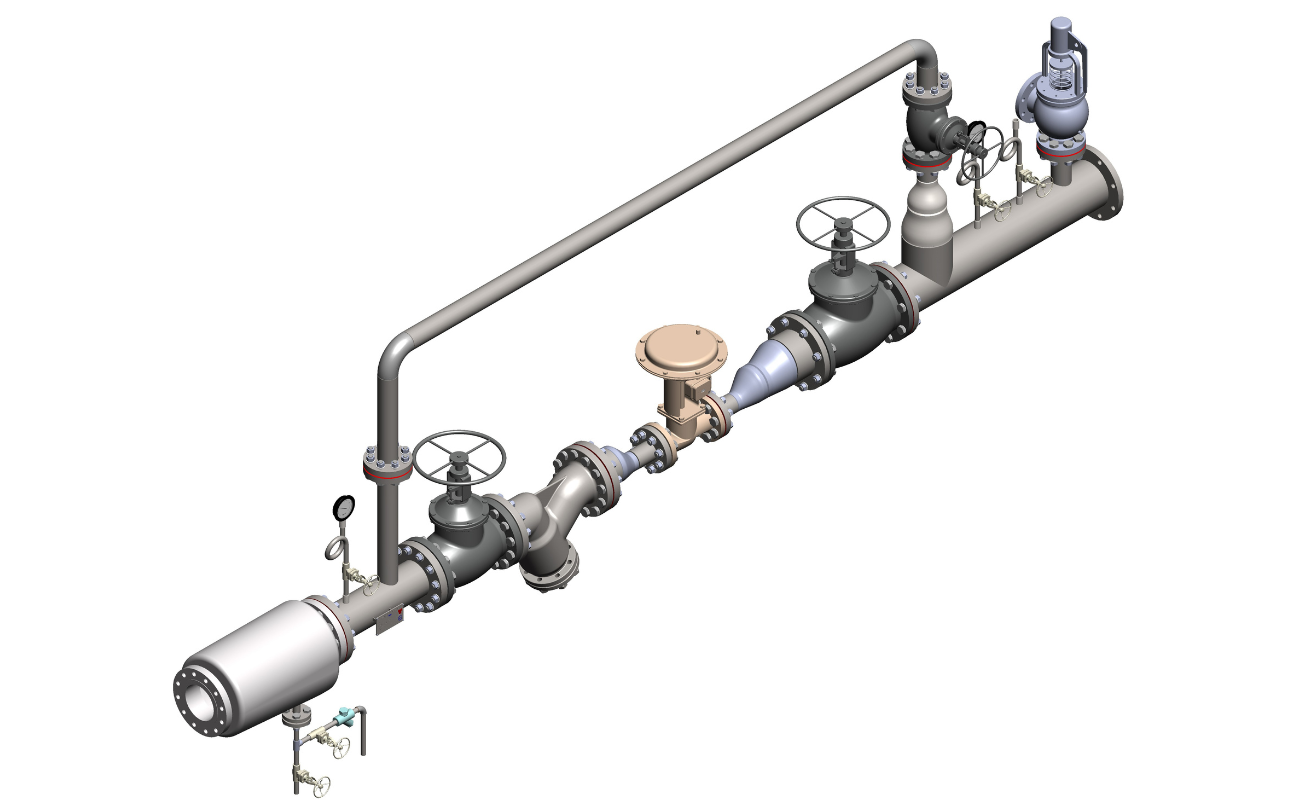
Pressure Reducing Stations
Ensures precise and stable steam pressure delivery for optimal process control and energy efficiency
Submit your enquiryPressure Reducing Stations are engineered systems designed to accurately and reliably reduce high-pressure steam from a main supply to a lower, stable pressure required by various process applications.
They are critical for optimising process control, protecting downstream equipment, and enhancing energy efficiency by ensuring steam is delivered at the precise pressure needed, preventing wastage and ensuring safe operation. Many industrial processes require steam at a lower pressure than that generated by the boiler. Delivering high-pressure steam directly to equipment designed for lower pressures can be unsafe and inefficient. A Pressure Reducing Station acts as a vital interface, precisely controlling the pressure drop using components such as a pressure reducing valve, safety valves, strainers, and isolation valves. These stations are custom-engineered to meet specific flow rates and pressure requirements, ensuring a stable and consistent supply of steam to the point of use. Proper design and installation of a PRS are essential for preventing water hammer, maximising heat transfer efficiency, and extending the life of downstream equipment.
Key Industries/Applications:
- Industries: All industries utilising steam, particularly those with diverse pressure requirements for different processes, including sectors such as food & beverage, pharmaceutical, chemical, textile, paper, power, and manufacturing
- Applications: Supplying low-pressure steam to heat exchangers, drying cylinders, reboilers, autoclaves, sterilisers, jacketed vessels, and any process requiring a stable, lower steam pressure
Technical data
- Product capacity / performance range: Designed to handle a wide range of inlet pressures (from boiler pressure) and deliver precise outlet pressures (e.g., from a few bar to dozens of bar), catering to specific process needs; flow capacity varies based on design and component sizing
- Compliance or standards: Engineered and manufactured in accordance with relevant international standards such as ASME (American Society of Mechanical Engineers), PED (Pressure Equipment Directive), and API (American Petroleum Institute) for pressure vessels, piping, and safety, ensuring safe and reliable operation
- Design, flexibility or customisation:
- Valve types: Can incorporate self-acting (pilot-operated or direct-acting) or control valve-based pressure reducing valves
- Configuration: Single-stage or multi-stage pressure reduction for large pressure drops
- Safety features: Includes safety relief valves for over-pressure protection
- Instrumentation: Pressure gauges (upstream and downstream), thermometers, and sometimes flow meters for monitoring
- Pre-fabricated: Often offered as pre-piped, skid-mounted units for ease of installation
- Bypass lines: Includes bypass lines for maintenance and manual operation during emergencies
- Condensate drainage: Designed with proper condensate drainage points (steam traps) for efficient operation
Product features





Products
PRS with Direct Acting Valve
Reliable and cost-effective steam pressure reduction for stable process operation
PRS with Control Valve
Helps achieve dynamic and highly accurate steam pressure control for demanding process applications