


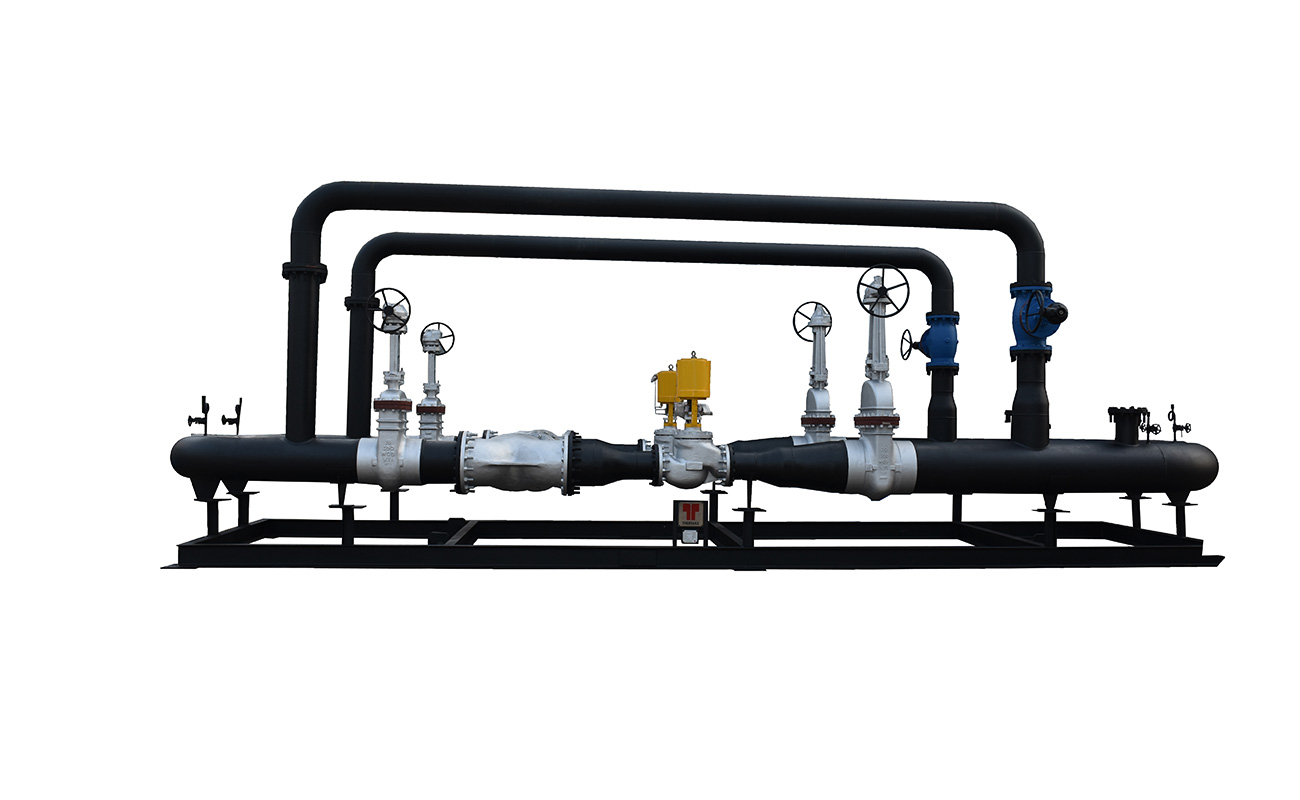
Pressure Reducing and Desuperheating System (PRDS)
Precisely controls steam pressure and temperature for optimal process performance and energy recovery
Submit your enquiryA Pressure Reducing and Desuperheating System (PRDS) is a sophisticated, integrated solution designed to simultaneously reduce the pressure of superheated steam to a desired lower pressure and also reduce its temperature to a specified level (often to saturation temperature or controlled superheat).
This system is critical for safely supplying steam at exact conditions required by specific processes, maximising energy recovery, enhancing process control, and protecting downstream equipment from excessively high temperatures. Many industrial processes require steam at lower pressure and often at a controlled temperature (e.g., saturated steam). Superheated steam from a boiler, while efficient for transmission, needs its temperature reduced before being used in most heat exchange or process applications to prevent overheating and ensure efficient heat transfer. A PRDS intelligently combines a pressure reducing station with a desuperheater. The pressure is first reduced, and then water is injected into the steam flow in a controlled manner to absorb excess heat and lower the temperature. This integrated approach ensures that steam is delivered at precisely the right pressure and temperature, optimising process efficiency, enhancing safety, and allowing for effective utilisation of high-pressure steam for various demands.
Key Industries/Applications:
- Industries: Power generation (turbine bypass, auxiliary steam supply), chemical & petrochemical, refineries, fertilisers, steel, textile, paper, and any large-scale industrial facility requiring precise steam conditioning
- Applications: Supplying steam to process units, turbines (for specific stages), heat exchangers where temperature control is critical, auxiliary steam headers, and general plant utility steam requirements derived from a high-pressure, superheated source
Technical data
- Product capacity / performance range: Engineered to handle a wide range of superheated steam conditions (pressure and temperature) and deliver steam at precise lower pressures and temperatures (e.g., saturated or slightly superheated) with high stability, across capacities from small auxiliary lines to large power plant bypasses
- Compliance or standards: Designed and manufactured to stringent international codes and standards such as ASME (American Society of Mechanical Engineers), IBR (Indian Boiler Regulations), PED (Pressure Equipment Directive – European Union), API (American Petroleum Institute), and ANSI/ISA (American National Standards Institute / International Society of Automation) guidelines for control systems, ensuring robust safety and performance
- Design, flexibility or customisation:
- Core components: High-performance pressure reducing valve (often a control valve), desuperheater (e.g., venturi type, spray type, atomising type), safety relief valves, isolation valves, strainers, bypass lines
- Control system: Sophisticated automation with PID (proportional-integral-derivative) controllers, temperature transmitters, pressure transmitters, and flow transmitters for precise, dynamic control
- Configuration: Custom-engineered skid-mounted units for easy installation, pre-piped and pre-wired
- Material selection: Wide range of materials (e.g., carbon steel, alloy steels, stainless steel) suitable for high temperatures and pressures
- Noise attenuation: Often includes special designs or silencers for noise reduction
Product features