


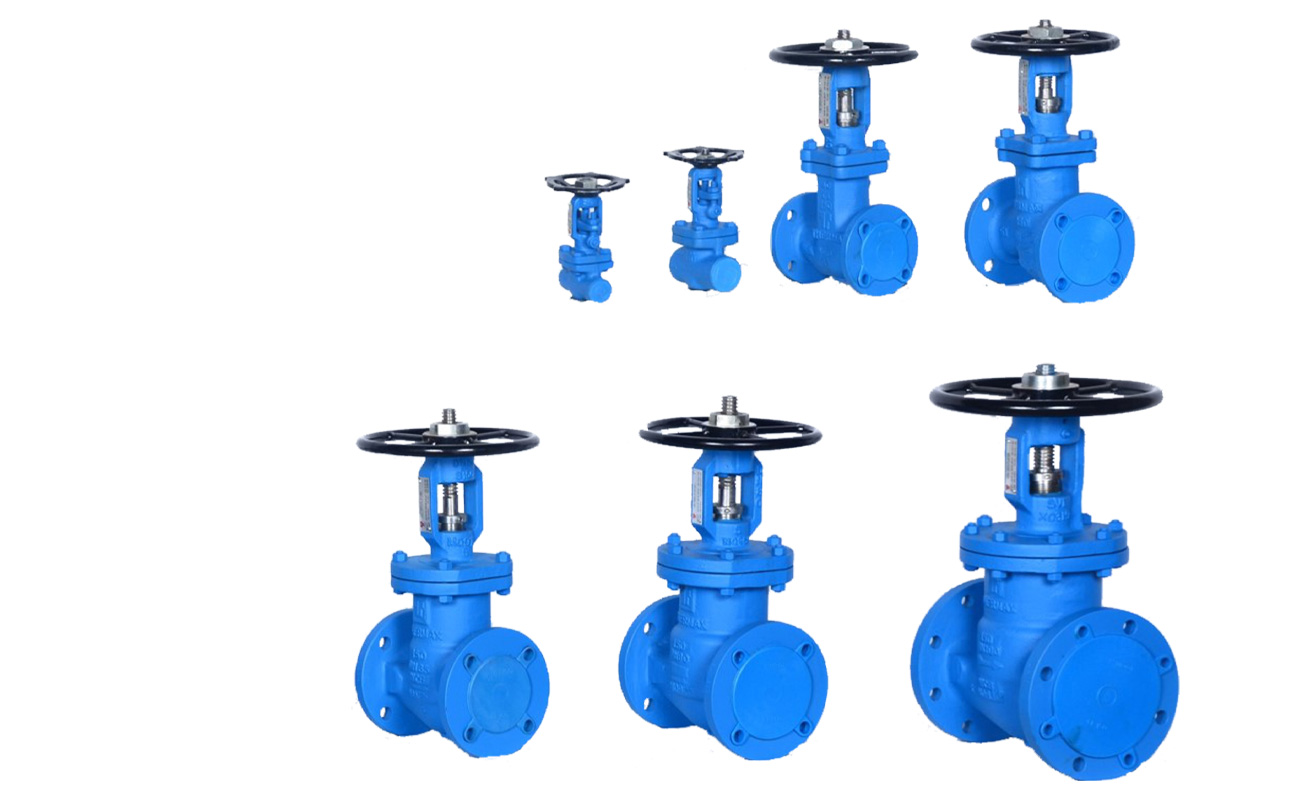
Bellow Seal Valves
Ensures zero stem leakage and maximum safety through a maintenance-free bellows seal design
Submit your enquiryBellow Seal Valves are advanced globe-type valves designed to provide absolute zero leakage to the atmosphere across the stem, eliminating fugitive emissions and ensuring maximum process fluid containment.
By utilising a durable metallic bellows, they offer superior safety, significant energy savings by preventing steam loss, reduced maintenance costs, and a longer operational life compared to conventional gland-packed valves. Conventional globe valves often rely on gland packing for stem sealing, which can degrade over time, leading to leaks, energy loss, and potential safety hazards, particularly with steam or hazardous fluids. Bellow Seal Valves overcome this challenge by incorporating a welded metallic bellows that forms a hermetic seal between the valve stem and the bonnet. This innovative design completely isolates the process fluid from the atmosphere, ensuring a leak-free operation. The bellows allows for linear stem movement while maintaining a tight seal, making these valves ideal for critical applications where environmental protection, energy conservation, and personnel safety are paramount.
Key Industries/Applications:
- Industries: Power generation, chemical & petrochemical, pharmaceutical, oil & gas, textile, food & beverage, and any industry handling high-temperature, high-pressure, or hazardous fluids
- Applications: Steam lines, condensate return systems, hot oil systems, thermal fluid systems, toxic gas lines, vacuum applications, and where zero-leakage containment is critical for safety and efficiency
Technical data
- Product capacity / performance range: Available in various sizes (DN – nominal diameter) and pressure classes (PN – pressure nominal / ASME (American Society of Mechanical Engineers) class) to suit a wide range of flow rates and operating conditions, designed for tight shut-off and precise flow regulation
- Compliance or standards: Manufactured to international standards such as ASME (American Society of Mechanical Engineers), API (American Petroleum Institute), BS (British Standards), and DIN (Deutsches Institut für Normung – German Institute for Standardisation) for design, materials, and testing, ensuring high quality and safety
- Design, flexibility or customisation:
- Valve type: Typically globe-type for throttling and isolation, but the bellows seal principle can be applied to other valve types
- Materials: Available in carbon steel, stainless steel, and various alloy steels for compatibility with different fluid chemistries and temperature ranges
- Connections: Flanged, butt-weld, or socket-weld end connections
- Bellows material: Multi-ply metallic bellows (e.g., stainless steel, inconel) for enhanced flexibility and cycle life
- Optional features: Backseat design for secondary sealing, external position indicators, extended bonnets for cryogenic or high-temperature services
Product features