

PlyMax – Press Automation System
Enhances production efficiency, product quality, and energy management in plywood manufacturing
Submit your enquiryPlyMax - the plywood automation system offers comprehensive, intelligent control over key processes in plywood manufacturing, particularly those involving steam (e.g., veneer drying, hot presses).
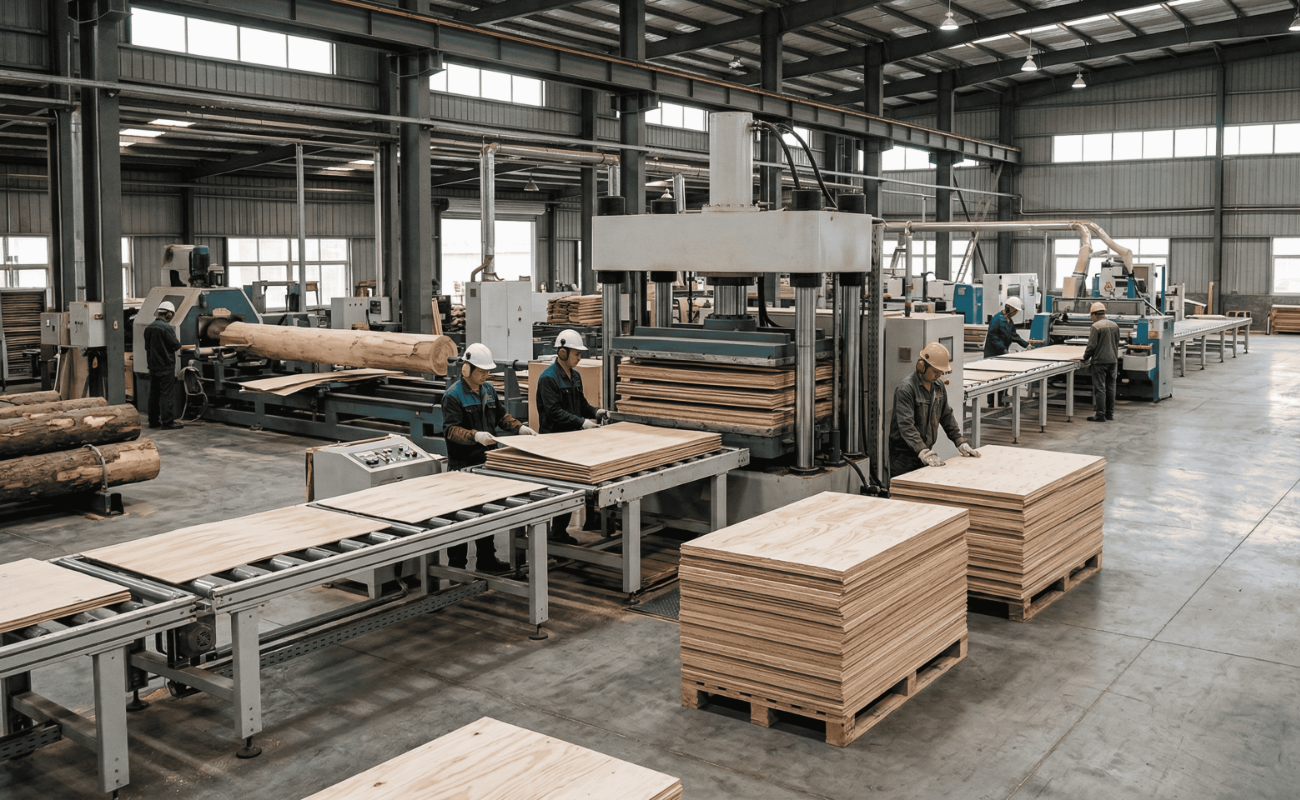
By automating critical parameters, it ensures consistent product quality, optimises energy consumption, minimises waste, and enhances operational safety and throughput, leading to significant cost savings and improved profitability.Plywood manufacturing involves several energy-intensive and quality-critical steps, where precise control of temperature, pressure, and time is essential. Manual control can lead to inconsistencies, energy waste, and reduced product quality. A plywood automation system leverages advanced sensors, control valves, and programmable logic controllers (PLCs) or distributed control systems (DCS) to precisely manage processes like veneer drying (using hot air or steam), glue spreading, and hot pressing (using steam-heated platens). This automation ensures uniform drying, optimal curing, reduced energy consumption, minimises defects, and provides comprehensive data for quality control and process optimisation, making the entire manufacturing process more efficient and reliable.
Key Industries / Applications:
Industries: Plywood manufacturing, veneer production, and wood-based panel industries
Applications: Automation of veneer dryers (controlling hot air/steam temperature, humidity, airflow), hot presses (controlling platen temperature, pressure, pressing time), glue kitchen management, and overall plant energy management.
Technical data
- Product capacity / performance range: Scalable to automate plywood manufacturing lines of various capacities, ensuring precise control over critical parameters (e.g., temperature control within ±1-2°C, pressure control within ±0.5%)
- Compliance or standards: Engineered to meet relevant industry standards for wood processing, safety, and automation
- Design or customisation:
- Control elements: Temperature sensors, pressure transmitters, humidity sensors, control valves for steam/thermic fluid, motor controls for conveyors/fans
- Automation platform: PLC/DCS-based system with user-friendly HMI (human-machine interface)/SCADA (supervisory control and data acquisition) for monitoring, recipe management, and reporting
- Algorithm: Advanced control algorithms for optimised drying curves, pressing cycles, and energy recovery
- Data logging: Provides historical data for analysis, quality control, and process optimisation
- Safety features: Emergency stops, interlocks, alarm management
- Modular design: Customisable for specific process sections or complete plant integration
Product features